
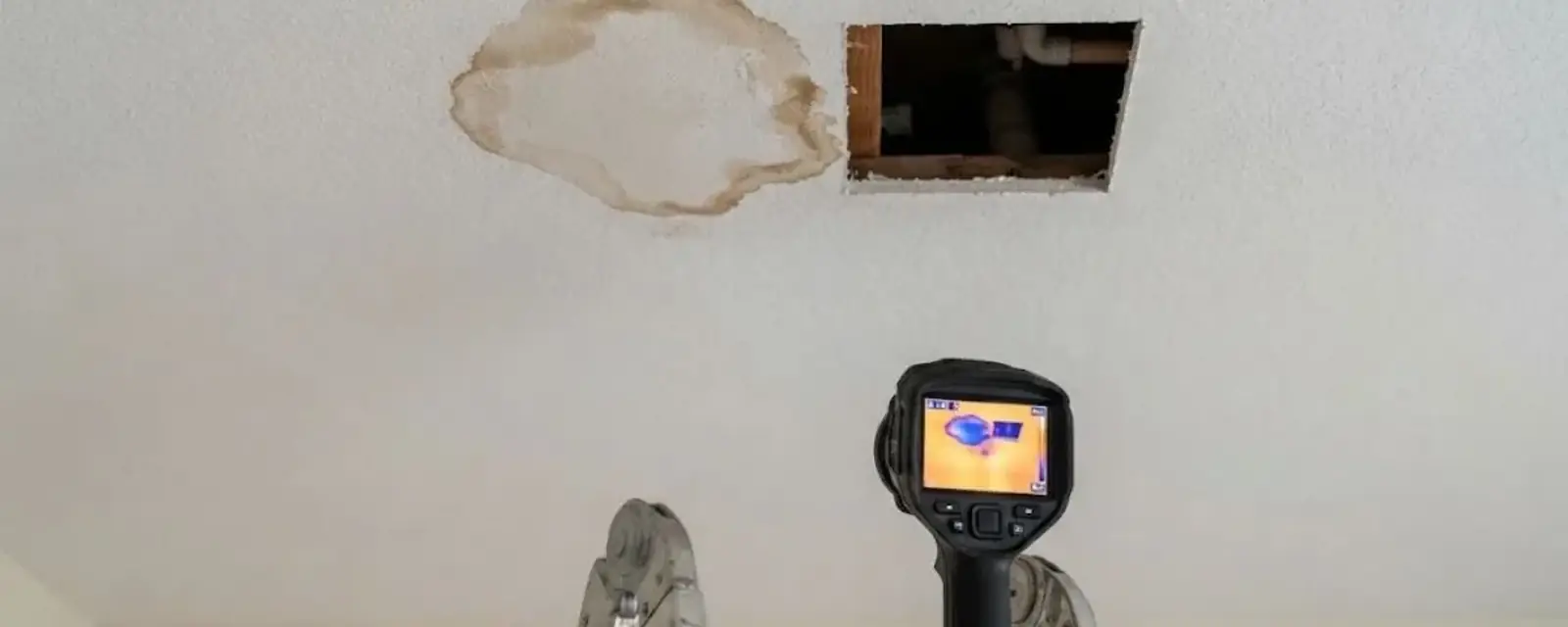
The fastest way to detect a water leak in a house is the meter test: turn off everything that uses water, watch the meter, and see if it still moves. If it does, water is escaping somewhere. In Reynoldsburg, OH homes, the leak is usually a toilet flapper, a supply line, or a buried pipe.
Below is a practical sequence you can follow in about an hour, with a table of common leak spots, a checklist for each room, and the signs that mean it is time to shut off the main valve and call a plumber.
The meter test, step by step
You need a flashlight and a few quiet minutes. Do this before anything else.
Stop all water use
Close every tap, pause the dishwasher and washer, and make sure no one flushes. Turn off the ice maker if you can.
Find the meter
It sits in a box near the street, or inside the house where the supply line enters. Lift the lid with a screwdriver and wipe the glass.
Read the leak indicator
Most meters have a small triangle or star that spins with even a trickle. If it turns, water is moving.
Wait and compare
Note the reading, wait 30 minutes with no use, and read again. Any change confirms a leak.
Shut the house valve
Close the main shutoff inside the home and check the meter once more. If it stops, the leak is inside. If it keeps moving, the leak is between the meter and the house.
Where leaks hide and how to check
Start with the cheap, common spots before assuming a buried pipe.
| Location | Telltale sign | Quick check |
|---|---|---|
| Toilet tank | Faint trickle or refill hiss | Add food coloring, wait 15 minutes, look in bowl |
| Under sinks | Damp cabinet floor or swollen wood | Dry the pipes with a towel and watch for new beads |
| Water heater | Pooling at the base or wet insulation | Feel around fittings with a dry paper towel |
| Behind walls | Peeling paint or a stain that grows | Press gently, then check the meter test result |
| Outside hose bib | Drip at the spigot or soggy soil | Tighten the packing nut and look at the wall inside |
The toilet is the usual suspect
A worn flapper lets water leak from the tank into the bowl all day. You will not see it, because the water slides down the bowl wall quietly. The meter test often reveals it when nothing else is running.
Put a few drops of food coloring in the tank, do not flush, and wait. If color shows in the bowl, the flapper or flush valve needs replacing. This is a cheap part and a job many people finish in a short visit to a hardware store.
Room-by-room checklist
Walk through with a flashlight and a dry paper towel, and write down anything damp.
- Kitchen: look inside the cabinet under the sink
- Kitchen: check behind the dishwasher for moisture
- Bathrooms: inspect the base of every toilet
- Bathrooms: look for a soft spot around the tub
- Laundry: examine both washer hoses and shutoff valves
- Basement: scan joists and pipes for drips and stains
- Garage or utility: check the water heater and softener
- Outside: walk the foundation after a dry day
Small leak versus pipe that needs help now
Not every leak is an emergency. Knowing the difference keeps you calm and the damage small.
Can usually wait a day
- Slow drip at one faucet
- A running toilet
- Dripping hose bib
- Small bead at a supply line nut
Shut off water now
- Spray or steady stream from a pipe
- Ceiling stain that is growing
- Meter spinning fast
- Water pooling under a floor
When the meter keeps moving
If the meter still runs with the house valve closed, the leak is outside, on the line from the meter to the house. Wet spots in the yard, an unusually green strip of lawn, or the sound of rushing water near the foundation are the usual clues.
Our leak detection visits use listening gear and pressure tests to find that spot without digging up the whole yard. If a pipe has actually split, the fix may be burst pipe repair, and 24/7 emergency dispatch means you can call after hours when water is flowing and you cannot stop it.
What to do while you wait for a plumber
Shut off the water at the main valve and open the lowest faucet to drain the lines. Move rugs and electronics away from any wet area. Do not touch outlets or switches that sit near water, and shut off power to that area at the panel only if you can reach it dry.
Take photos of damage for your insurer, and note when you first saw it. Many policies treat sudden damage differently from slow, long-running leaks, so check your policy language and ask your insurer what they need.
Serving homes beyond Reynoldsburg
People in Whitehall often start with the same meter test and call when the dial will not stop. We dispatch to Whitehall and to Pickerington from our Reynoldsburg base, so the steps in this guide apply whether the leak is in a ranch from the postwar years or a newer build.
Reynoldsburg note: water hardness and slow leaks
Columbus softens its water on average to 120 parts per million, or approximately 7 grains per gallon, according to its Water Hardness page. Columbus also publishes the Water for Living Consumer Confidence Report if you want to read how the water is treated. That moderate hardness still leaves mineral scale on fixtures over time, so a faucet that drips can leave a white crust at the point of the leak.
The practical tip: a crusty ring around a valve, supply nut, or tank bolt is a hint that water has been seeping there for a while. Wipe it off, dry the spot, and check it again the next day. Reynoldsburg is a Columbus water and sewer contract community, so ask your water utility about billing questions that follow a large unexplained use.
Source type: Columbus.gov Water Hardness page and contract communities page.
Quick answers
Yes, but less reliably. Look for damp spots, stains, musty smells, and sounds of running water in a quiet house. The meter gives a clear yes or no, so use it first when you can reach it.
Watch it for at least 30 minutes with every fixture off. A moving indicator or a changed reading means water is escaping. For a very slow leak, you may need to leave it for a few hours and check again.
It can, but not always. Filling a pool, watering the lawn, or houseguests also raise use. Compare the bill to the same month last year and run the meter test to see if water moves with everything off.
Shut the main valve if you see spraying, pooling, or a ceiling stain. For a slow drip, you can leave it on while you investigate. Always shut it off before opening a wall, and call a plumber instead of cutting into pipes yourself.
Columbus reports softening its water to about 120 parts per million, roughly 7 grains per gallon, and publishes a Consumer Confidence Report. Reynoldsburg is listed as a Columbus contract community, so read the report and ask your utility about your own address.