
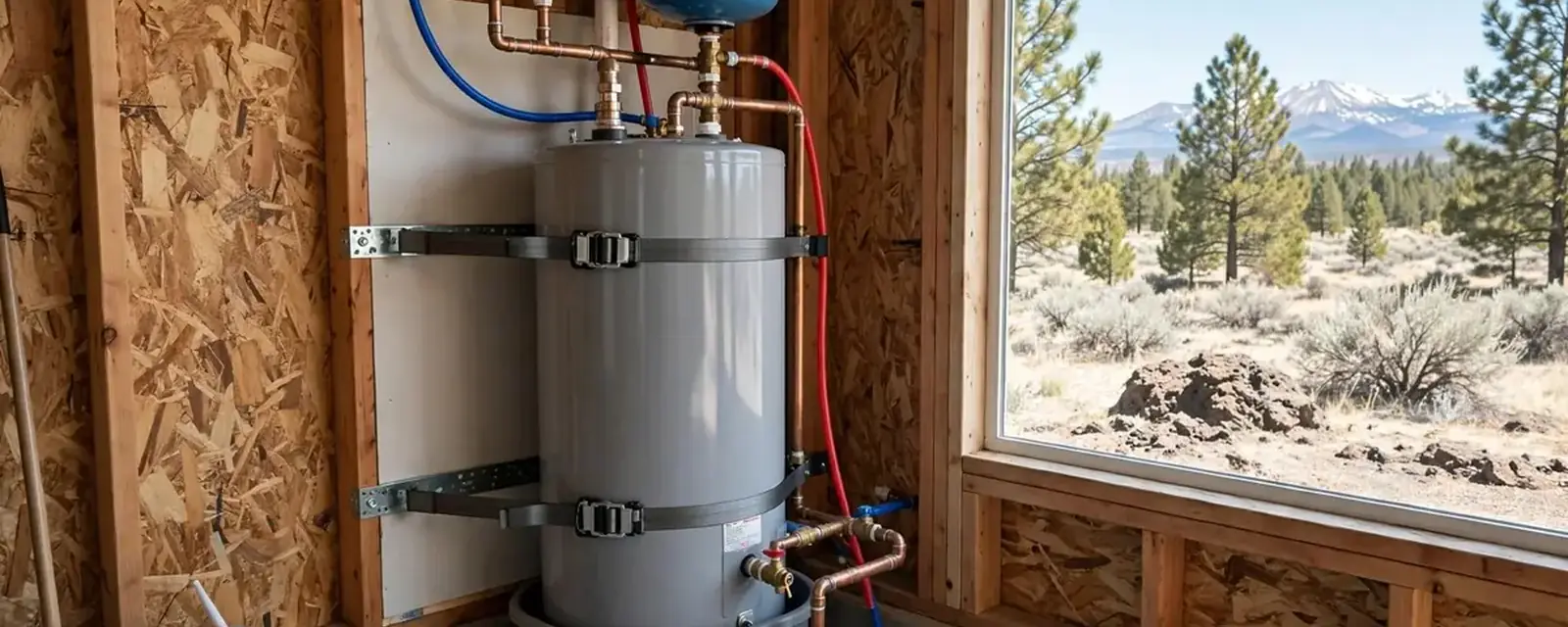
Water heater installation in Reynoldsburg, OH is the planned work of placing a heater where none existed, moving one, or fitting one into a new build, with the piping, vent, fuel or power, and shutoffs all designed to match. It is different from an emergency swap because you get time to choose.
Our licensed plumbers walk the space with you, work out the loads, and set a price before work begins. If a heater is already leaking, urgent problems can still be called in 24/7.
Start with the hot water you actually use
Sizing begins with people and habits, not square footage. A couple who showers at different hours needs less storage than a household of five with a soaking tub and a dishwasher running at the same time. We ask about peak mornings, then match tank size and recovery rate to that.
Too small a tank runs cold in the middle of a shower. Too large a tank burns standby energy all day heating water nobody uses. Neither mistake shows itself on installation day, which is why sizing deserves ten minutes of conversation first.
Fuel and venting: gas against electric
The fuel you pick drives most of the installation work that follows.
Gas heater
- Needs a gas supply line with a shutoff and a drip leg
- Needs a vent path that rises and terminates correctly
- Needs combustion air in the room
- Recovers quickly after heavy use
Electric heater
- Needs a dedicated circuit sized to the elements
- Needs no flue, so placement is more flexible
- Recovers more slowly than a gas unit of equal size
- Heat pump versions need airflow and a condensate drain
Planning a new heater?
A licensed plumber can look at the space and talk through sizing, venting, and fuel.
How a planned installation moves
The order below fits new construction and remodels alike, with the permit question settled early.
Walk the site
We look at the space, the nearest drain, the existing fuel supply, and the path the vent will take to the outside.
Settle the layout
Location, tank size, and pipe routes get decided together. Shutoffs go where you can reach them without moving boxes.
Rough in
Supply piping, relief line, gas or power connection, and a drain or pan go in before the heater is set.
Set and connect
The heater is placed, leveled, and tied in with new flexible connectors. An expansion tank goes on where pressure demands it.
Inspect and test
We pressure test, fire the unit, check the draft, and walk you through shutoffs. Inspection is coordinated if your address needs it.
Where to put it: five location questions
Location is the one thing that is hard to change once the drywall is up.
Floor drain nearby
A heater next to a drain turns a future leak into a minor event. Far from one, a catch pan and relief line become more important.
Clear service space
Panels, anode, and burner access need elbow room. A heater built into a tight closet makes every later repair longer.
Short hot runs
The closer the tank to the bathrooms and kitchen, the less cold water you pour down the drain waiting for heat.
Venting route
Gas units need a straight, rising path to the roof or wall. Long horizontal runs are limited by the manufacturer.
Freeze exposure
An unheated garage corner or an exterior wall can chill supply lines in January. We insulate or move the lines.
New construction plumbing: hot water in the rough-in
In a new build, the heater is planned before the walls close. We coordinate with the framer and electrician so the vent chase, circuit, and floor space are reserved. Running a recirculating loop or a second heater for a distant bathroom is far simpler at this stage than after drywall.
Builders often want the heater set last, and we can schedule around that. What we ask for is a heated, dry space and finished access to the shutoffs, so the final test can happen before the final inspection.
Installation extras and what they do
Quotes list several small items, and each has a job.
| Item | What it does | When it matters |
|---|---|---|
| Expansion tank | Absorbs pressure from heated water | Closed systems with a check valve or reducing valve |
| Drain pan and line | Directs a leak to a safe spot | Heater above finished space |
| Relief valve and discharge pipe | Releases dangerous pressure or heat safely | Always |
| Dielectric fittings | Separates unlike metals to slow corrosion | Copper to steel connections |
| Isolation valves | Allows servicing without draining the house | Any tankless install, and wise for tanks |
Inspection, licensing, and Columbus water
Franklin County Public Health provides plumbing inspection across Franklin County outside Columbus and Grove City, and its plumbing page lists Reynoldsburg. Ask the Franklin County Public Health plumbing office or your plumber whether a permit applies to your installation, so you are not surprised when you sell.
Ohio licenses plumbing contractors through the Ohio Construction Industry Licensing Board, and you can check a license through Ohio's online license lookup. Run that check on anyone who bids on your heater, including us.
Columbus softens its water to about 120 ppm, near 7 grains per gallon, and Reynoldsburg buys from it as a contract community. Scale still builds, and an anode rod wears down over time, so pick a tank with an accessible anode and leave room above it to pull the rod.
Think about the next owner of this heater
A good installation is one the next plumber can service without cutting pipe. Unions, shutoffs, and clearance above the tank cost little at install time and save a lot later. Our general plumbing installation service follows the same idea for every fixture we set.
Questions to settle before installation day
Answer these and the install goes smoothly.
- Gas, electric, or heat pump, and why
- Tank size based on peak morning use
- Final location and the path for the vent
- Who pulls the permit, if one applies
- Where the drain pan line will end
- Whether a water softener will be added later
Safety checklist for installation day
A new heater holds hot water and, on gas models, a flame, so a few rules apply while the work is open.
- Keep children and pets out of the work area.
- If you smell gas, leave the house and call the gas utility or 911.
- Do not relight a pilot or restore power until work is finished.
- Keep boxes and paint cans away from the heater and vent.
- Confirm a working carbon monoxide alarm sits on this floor.
- Ask where the relief valve discharge pipe ends before we leave.
What drives the cost of an installation
A planned install can be priced closely because most of the variables are visible beforehand.
Heater type and capacity
A standard tank is the baseline. Tankless and heat pump units cost more and need more supporting work.New gas or electric runs
Extending a gas line or adding a 240 volt circuit may involve more than one trade.Vent length and material
Longer vents, special materials, and roof penetrations add parts and time.Location changes
Moving a heater means moving pipes, and wall or ceiling access can be the largest part of the job.Inspection coordination
Scheduling and meeting an inspector takes time, and we plan for it.Insurance does not usually pay for upgrades or new installations. If the work follows a covered loss, ask your insurer what it will reimburse and in what form.
A clear price comes before work starts. Want your real number? Call (614) 656-1470.
Questions about water heater installation
Count the most hot water used in a busy hour, such as showers, a dishwasher, and laundry together. Tank capacity and recovery rate should cover that peak. We ask about habits and fixtures, then pick a size. A bigger tank is not always better, since standby heat loss grows with every extra gallon.
We do not state a rule here that we cannot verify. Franklin County Public Health inspects plumbing in Reynoldsburg, and it says no permit is needed for replacing a faucet, sink, or toilet. For a heater, ask the Franklin County Public Health plumbing office or your plumber whether a permit applies before the work begins.
Yes. We coordinate with the builder on vent chases, circuits, and floor space during rough-in, then set and test the heater near the end of the build. A heated, dry area and finished access to shutoffs make the final inspection simpler. Planning for a distant bathroom early saves rework.
When water heats it expands, and in a system with a check valve or pressure reducing valve there is nowhere for it to go. A small tank with an air cushion absorbs the extra volume. Without it, the relief valve can drip and fixtures wear faster. We check for it on each installation.
Usually, with conditions. Gas units need a vent path and combustion air. Electric units need a circuit sized for the load. Pipe runs, drains, and wall access drive the effort. Walk the new spot with us and we will say plainly what has to change.
Columbus already softens water to around 7 grains per gallon, so the gain is smaller than in untreated areas. Some owners still add a conditioner for spotting or scale. Our water softener and filtration page covers what it can and cannot do.
Consider it if you want endless hot water and have a way to supply gas or power and vent it. The tankless water heater page covers the demands, flushing, and tradeoffs. If you are replacing a failed tank rather than planning, see replacement.
Also serving nearby towns
Dispatch for this service runs from Reynoldsburg to the towns below.