
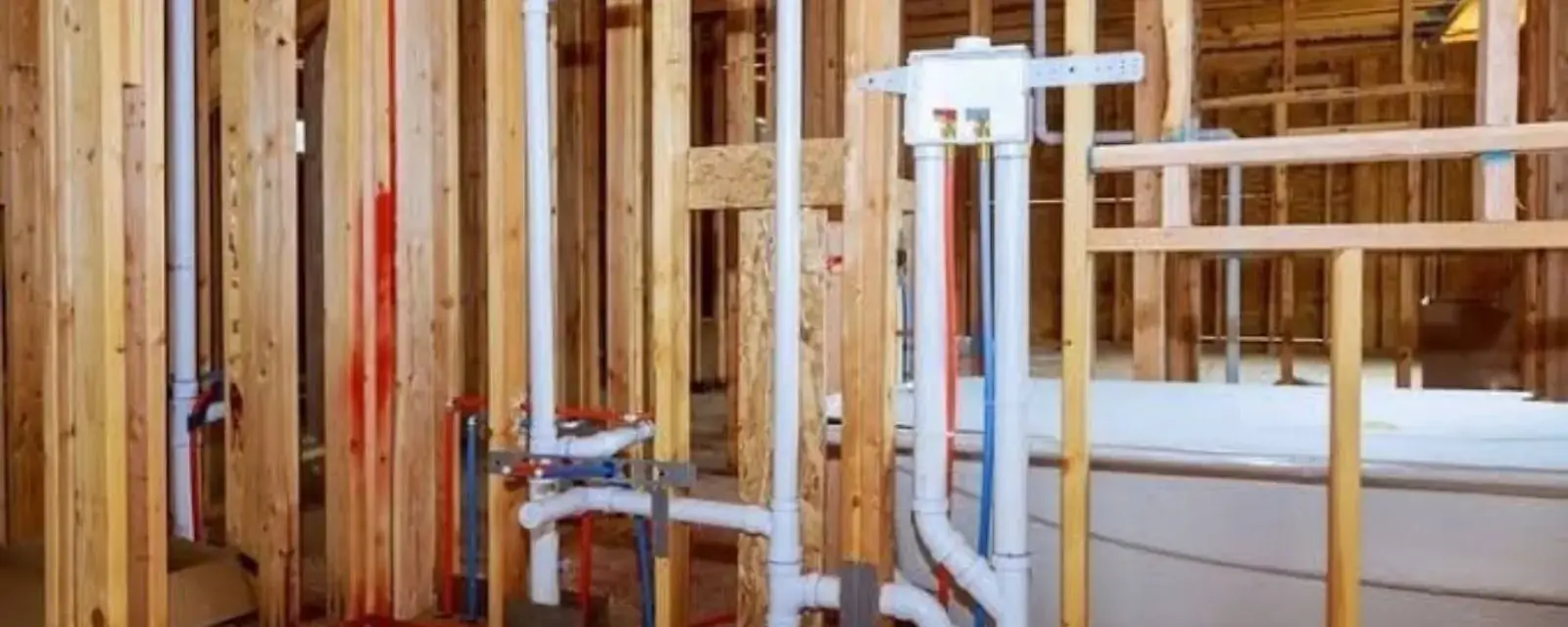
Plumbing installation means putting new water, drain, vent or gas piping and fixtures into a building, whether a single sink or a full house. Our licensed plumbers install for homeowners and builders in Reynoldsburg, OH and the rest of Franklin County.
Good installation work is mostly planning: where the pipes go, how the drains slope, where the vents leave the roof, and who inspects what before a wall closes. Urgent problems can still be called in at any hour.
Smell gas? Leave first, call us second
If you smell gas, hear a hiss near a gas line or appliance, or feel sick with no clear cause, leave the building right away. Do not flip switches, use a phone inside, or light anything. From outside, call your gas utility or 911 before you call us.
We can inspect and install gas piping once the utility has made the situation safe. We do not try to chase an active gas leak with the occupants inside.
What installation covers
Fixtures are the visible part: sinks, toilets, tubs, showers, laundry hookups, outdoor spigots, water heaters and disposals. Behind them is the pipe, in three systems. Supply brings water in under pressure, drain carries waste out by gravity, and vent lets air in behind the water so drains empty without gurgling.
Each system has its own rules about size, slope and fitting types, which is why a handyman swap and a plumber's rough-in are not the same job. For a planned tank swap, see how water heater installation works.
From rough-in to final connection
New work happens in two visits with an inspection in between.
Plan the layout
We mark fixture spots, check joist and stud space, and choose pipe sizes.
Rough-in
Supply, drain and vent pipes are set in the open framing before walls are closed.
Test and inspect
Pipes are pressure or water tested, and the work is left open for the inspector where one applies.
Set fixtures
After walls and floors are finished, we set the toilet, sinks, tub and faucets.
Final test
We run every fixture, check traps and shutoffs, and look for slow drains.
Have a project in mind?
Describe the room and the fixtures and we will tell you what the rough-in involves.
Remodel or new build: what differs
The trade is the same. The constraints are not.
| Job type | Main challenge | How we approach it |
|---|---|---|
| Kitchen remodel | Old drain slope and venting | Open the wall, correct the run, then set fixtures |
| Basement bath | Drain below the sewer line | Plan a pump or a below-slab connection |
| Laundry relocation | New supply and a standpipe | Confirm drain size and vent before moving |
| New construction | Coordination with other trades | Rough-in on schedule, test before insulation |
| Outdoor spigot | Freeze exposure | Choose frost-free and route inside the heated space |
Gas line inspection and installation
Gas piping runs to furnaces, boilers, water heaters, ranges and dryers, and each appliance needs the right pipe size for its load. We inspect existing lines for corrosion, loose fittings and missing shutoffs, then pressure test any new piping before it is put into service. That test is what proves a joint will not leak.
A dedicated gas page is planned for this site. Until then, treat any gas work as a licensed-trade job and not a weekend project, because a small leak is a fire and carbon monoxide risk.
What you can do yourself and what to hand off
Some jobs reward a handy owner. Others do not.
Reasonable to do yourself
- Swap a faucet or a showerhead.
- Replace a toilet fill valve or flapper.
- Install a new supply line to a sink.
- Add an aerator to a faucet.
Better handed to a plumber
- Anything with gas piping or a gas valve.
- New drain and vent runs.
- Moving a toilet or a tub.
- Tying into the main water line.
Inspection and permits in Franklin County
Franklin County Public Health provides plumbing inspection for Reynoldsburg, and it says no permit is needed to replace a faucet, sink or toilet. For anything beyond a straight swap, such as new drain lines or a new bathroom, ask FCPH whether an inspection applies and how to request it. Have your address ready, since parts of Reynoldsburg sit in Fairfield and Licking counties.
Ohio licenses plumbing contractors through the Ohio Construction Industry Licensing Board, and you can check a license through Ohio's online license lookup. If you are digging for a new yard line, the contractor must notify OHIO811 first and utilities mark their lines. Privately owned lines are your responsibility.
New construction plumbing basics
Builders and owners planning a new house should settle these early.
Fixture count
Every bath, kitchen and laundry adds supply and drain load, so size the lines for the final plan.
Water heater location
Central placement shortens hot water wait and keeps vent routes simple.
Drain slope
Gravity drains need continuous fall, which limits where basement bathrooms can go.
Shutoff access
Isolation valves at each bath save a lot of trouble later.
Test before drywall
A pressure test while walls are open is the cheapest leak check you will ever do.
What an installation price depends on
Installation jobs vary more than repair jobs, so the price follows the scope.
Rough-in or finish only
Running new pipe through framing is more work than setting a fixture on existing lines.Pipe and fixture choices
Material and fixture grade change both parts and labor.Access and demolition
Finished walls and tight spaces add time.Inspections
Where an inspection applies, the schedule includes waiting for it.Gas or special lines
Gas piping, sump discharge or a pump adds equipment and testing.Planned installations are normally not covered by insurance. If a failed fitting later causes sudden water damage, coverage depends on your policy and the cause, so check with your insurer.
Planning a project and want it priced clearly? Call (614) 656-1470.
Questions to settle before work begins
Decide these early and the job stays on track.
- Who pulls any inspection and when it is scheduled.
- Where shutoff valves will be located.
- Which fixtures you supply and which we supply.
- Who restores drywall and finishes after rough-in.
- What happens if the wall opens and surprises show up.
Questions about plumbing installation
Leave the building at once and call your gas utility or 911 from outside. Do not use switches or try to find the leak yourself. After the utility says it is safe, we can inspect the piping and fix or replace what failed.
Franklin County Public Health says no permit is needed to replace a faucet, sink or toilet. For new lines or a new bathroom, ask the county plumbing office, or ask us, before work starts. See toilet repair and installation for those fixtures.
Usually, yes. The question is where the drain sits compared to the main sewer line. If the fixture is below it, a sewage ejector pump or cutting into the slab may be needed, and each choice has tradeoffs we explain up front.
Yes. We rough in drain, waste, vent and supply lines, then return for the fixtures after finishes. Coordinate the schedule with your builder so the pressure test happens before insulation and drywall.
Ohio licenses plumbing contractors through the Ohio Construction Industry Licensing Board, and the state has an online license lookup. Ask any contractor for the name on the license, and look it up before the work begins.
Yes, and a remodel is often the cheapest time to do it because the walls are already open. Read about replacing supply pipe to see when partial work makes sense.
Also serving nearby towns
Dispatch for this service runs from Reynoldsburg to the towns below.