
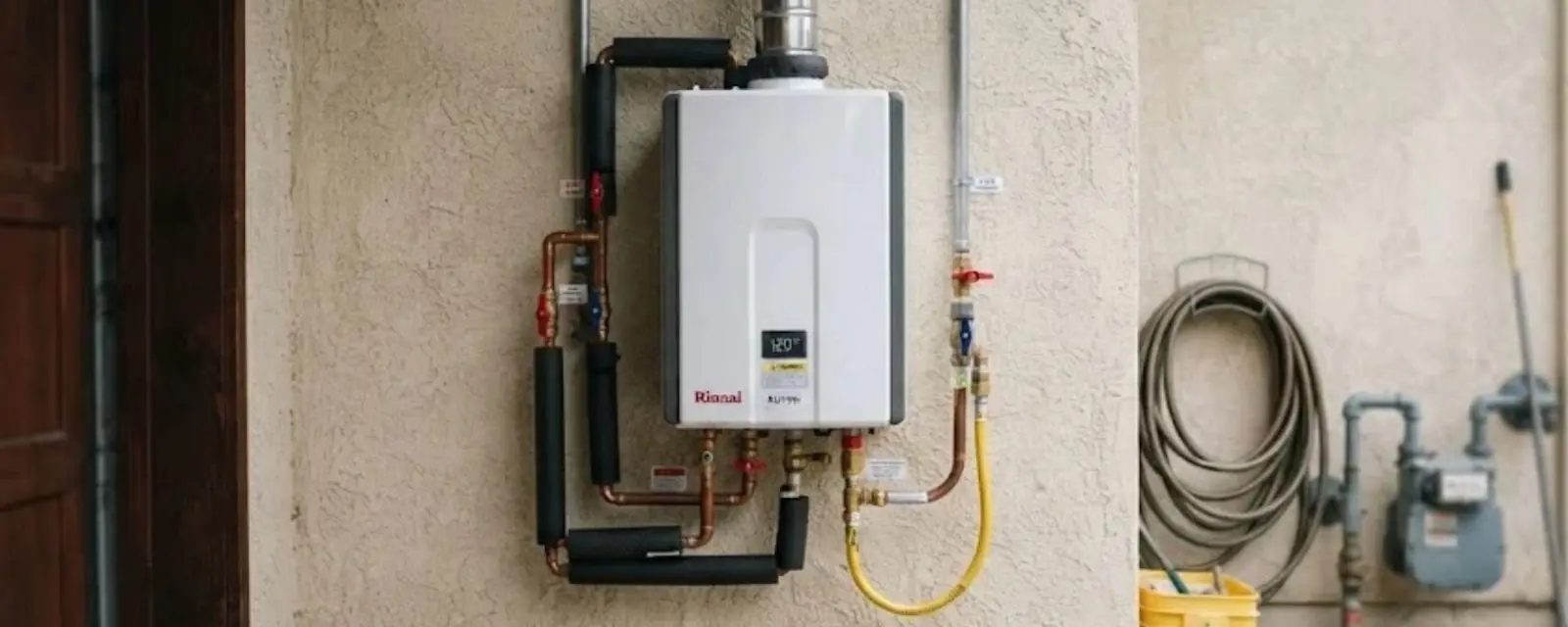
A low cost tankless water heater for a Reynoldsburg, OH home is possible, but the cheapest box on the shelf is rarely the cheapest finished job. Tankless units heat water on demand, so they need enough gas or electric capacity, proper venting, and correct sizing. Skip any of those and the install bill grows, or the heater underperforms.
This page explains where tankless budgets go, which choices hold the cost down honestly, and when a standard tank is the smarter buy.
Cheap unit, expensive install: the usual trap
Shoppers compare the sticker on the heater and forget the work around it. A gas tankless unit often needs a larger gas line, new stainless or polypropylene venting, and a condensate drain. An electric unit may need a heavy circuit and a panel upgrade. Those items are often what separates two quotes that look close.
Where the money goes on a tankless install
Use this table to ask the right questions when you compare bids. We also work with homes in Pickerington and Whitehall on the same terms.
| Part of the job | Why it affects cost | What to ask |
|---|---|---|
| Heater size | More fixtures at once need more flow capacity | What flow rate did you size for? |
| Fuel type | Gas needs venting, electric needs big amperage | Is the circuit or gas line sized for this unit? |
| Venting | Tankless exhaust is not the same as a tank flue | Which vent material and route? |
| Old heater removal | Disposal and any capping of old piping | Is removal included in the quote? |
| Water treatment | Hard water scale shortens the life of the heat exchanger | Do you include isolation valves for flushing? |
| Location | A move from the old spot adds pipe and labor | Why this location? |
Tankless or a standard tank: an honest split
A tank heater is the lower upfront choice in many homes. Tankless wins on other terms.
Tankless tends to fit when
- You want endless hot water for long showers
- Space is tight and wall mounting helps
- You plan to stay in the home long term
- Venting and gas lines are easy to reach
A tank heater tends to fit when
- Upfront budget is the main limit
- The house has an easy tank flue already
- Usage is modest and spread across the day
- You do not want to change gas or electrical
How we price a tankless job properly
This is the order of questions we work through, so the number is based on your house.
Count the fixtures
We list showers, tubs, and appliances that can run together at once.
Check the fuel source
We look at gas line size or electrical panel capacity for the chosen unit.
Plan the vent route
We find the shortest legal path to the outside for exhaust.
Note the water
We check for scale and decide on isolation valves for yearly flushing.
Write the price
You get a clear price before work starts, with parts and labor separated.
Sizing: the way to avoid paying twice
A tankless heater is rated in gallons per minute at a temperature rise. A shower head uses a few gallons a minute, and winter ground water is colder, so the rise needed is bigger. An undersized unit gives you lukewarm water when two fixtures run, which sends people to buy a second heater.
Sizing for your real use costs less than fixing a wrong guess. Our tankless water heater service starts with that count, and if you want the whole job handled, the details sit in our water heater installation work.
Gas or electric: which one costs less to own
Gas units move a lot of heat quickly, but they need a vent and a gas line that can keep up. Electric units skip the vent, yet they pull heavy current, and many homes would need a new circuit or panel work to feed them. Neither choice is cheap in every house.
Look at what is already in place. If a gas line and a usable vent route exist near the old tank, gas keeps the work small. If the panel has spare capacity and the house has no gas, electric may be the lower job. A plumber who checks both will tell you which wins at your address.
Ways to keep a tankless job honest and affordable
These are real savings, not shortcuts.
- Keep the new unit near the old one to save piping.
- Choose capacity for peak use, not the biggest model.
- Ask for isolation valves so flushing is easy.
- Compare quotes that list vent, gas, and electrical separately.
- Avoid one-day pricing that skips the gas line check.
- Ask whether the old flue can be reused safely.
- Plan the install outside the coldest emergency week.
What not to do yourself
Gas connections, vent assembly, and high-amperage electrical work on a tankless heater belong to a licensed plumber and, where it applies, a licensed electrician. A poorly vented gas unit can leak carbon monoxide, and a wrongly sized breaker can start a fire. If you smell gas, leave the building and call the gas utility or 911 before anyone else.
What you can do is research models, clear the area around the old heater, and photograph the gas meter and electrical panel for the quote.
Reynoldsburg note: softened water and a tankless heat exchanger
Columbus says it softens its water on average to 120 parts per million, or about 7 grains per gallon, and Reynoldsburg is listed as a Columbus water and sewer contract community. Confirm what your own bill says about the source, and look at the Water for Living Consumer Confidence Report for the full picture.
In practice, that is moderate hardness, not none, and tankless heat exchangers collect scale over time. Ask for service valves at install and a plan to flush the unit on a schedule. Also ask Franklin County Public Health or your plumber whether a permit applies to a heater installation.
Source type: Columbus Division of Water hardness page, Columbus contract communities page.
Quick answers
Not upfront, in most homes. Tankless often costs more to install because of venting and fuel supply. It can pay back through longer life and less standby heat loss, but that depends on your use.
Yes, usually a descaling flush. Mineral build-up lowers heat transfer and shortens the unit's life. Service valves installed with the heater make the flush quick.
Only if it is sized for that flow. Add up the gallons per minute of each fixture and compare them with the unit's rating at your winter water temperature.
Sometimes. Tankless burners draw more gas at once, so the line may need to be larger. A plumber checks the meter, run, and length before quoting.
Columbus reports softening to about 120 ppm, or 7 grains per gallon, which still leaves minerals that can scale. Plan to flush the unit, and check your own water report.