
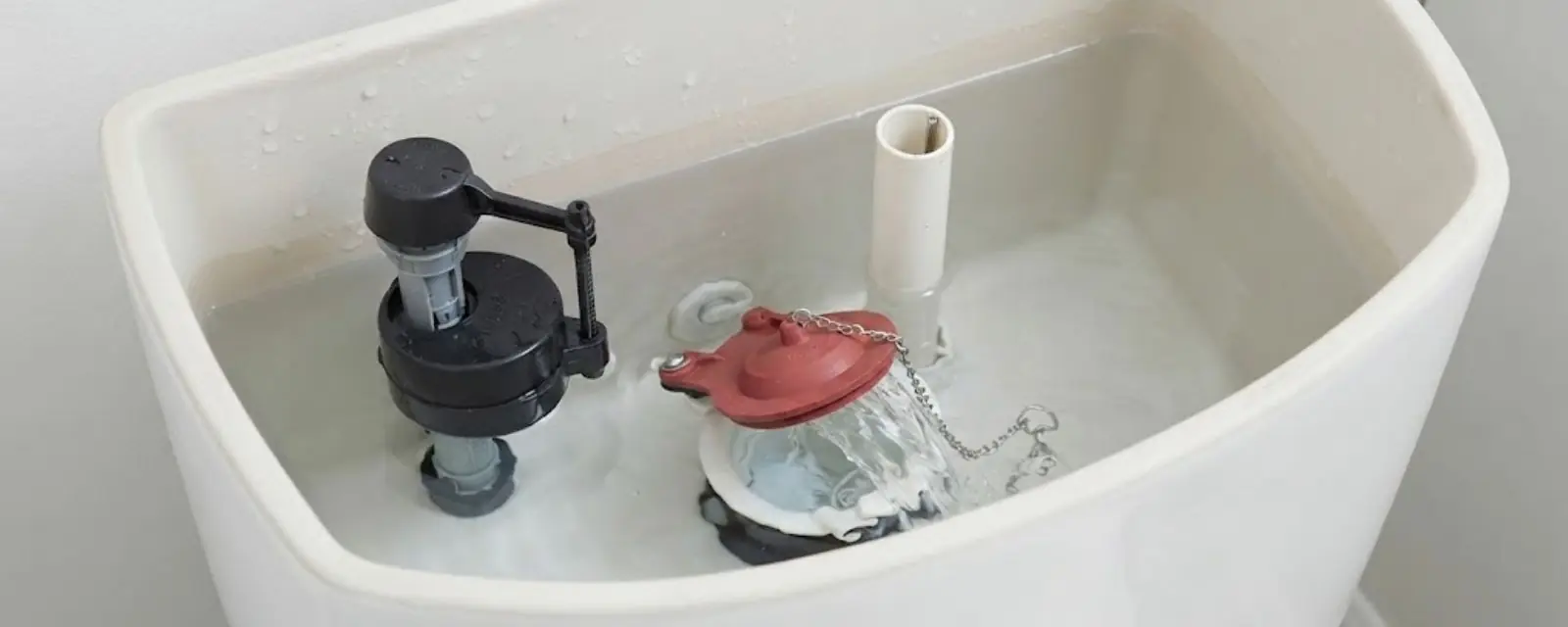
A cracked toilet tank in a Reynoldsburg, OH bathroom can be sealed only if the crack is a thin hairline above the waterline. Anything below the waterline, anything that runs through a bolt hole, or any crack that widens when the tank fills means the tank has to go. Porcelain does not flex, so a repair that holds water is a short-term patch, not a cure.
Below is how to tell which kind you have, what to do tonight, and when a plumber saves you a flooded floor.
Stop the leak first, diagnose second
Do these in order before you look at the crack.
Close the stop valve
Turn the oval handle on the supply line behind the toilet clockwise until it stops.
Flush to empty
Flush once so the tank drains, then hold the handle to clear the last water.
Sponge the remainder
Dry the inside with a sponge and towel so you can see the full crack.
Dry the outside
Wipe the porcelain and floor, then check again after ten minutes for new beads of water.
Mark the crack ends
Use a pencil dot at each end. If the crack grows later, you will see it.
Which crack is which
Where the crack sits decides whether a repair is even worth attempting.
| Crack location | What it means | Best move |
|---|---|---|
| Hairline above waterline | Cosmetic, no water contact | Epoxy seal or leave alone |
| Below waterline, thin | Weeps when the tank is full | Short-term patch, plan replacement |
| Through a bolt hole | Stress crack from overtightening | Replace the tank |
| Along the bottom seam | Tank and bowl are stressed | Replace the tank or toilet |
| Lid only | Does not affect water | Replace the lid |
| Spider web network | Porcelain is failing broadly | Replace now |
What an epoxy repair can and cannot do
A two-part waterproof epoxy putty made for porcelain can seal a thin crack if the surface is bone dry and clean. Rough the area lightly with fine sandpaper, press the putty into the crack, smooth it, and let it cure for the full time on the label before refilling. Plan on a day of no flushing.
Treat it as a bridge. Tank walls carry the weight of the water and the pull of the lid and bolts every day. A sealed crack that flexes can reopen, usually when nobody is home, which is how small bathroom leaks become ceiling stains in the room below.
Tools and supplies for a patch attempt
Gather everything before you open the epoxy, because the working time is short.
- Two-part waterproof epoxy putty rated for porcelain
- Fine sandpaper and a clean rag with rubbing alcohol
- Disposable gloves and a plastic putty knife
- Sponge, towels, and a small bucket for leftover water
- Adjustable wrench for the supply line nut
- Painter's tape to hold a lid or part in place
- Flashlight to inspect inside the tank walls
Patch it yourself or call a plumber
The line is clearer than most people think.
Reasonable for a homeowner
- Crack is a dry hairline above waterline
- Tank is not leaking at the bolts
- Supply stop valve closes fully
- You are fine with a temporary fix
Better with a licensed plumber
- Stop valve will not close or drips
- Water is reaching the floor or ceiling below
- Crack runs through a bolt hole
- Tank wobbles on the bowl
When the crack is hiding a bigger leak
Not every puddle comes from the crack. A bad flapper, a worn wax ring, or a weeping supply line can leave the floor wet and send you hunting in the wrong place. Dry everything, tape tissue to the suspect spots, and watch which paper darkens first.
If the floor stays damp and you cannot find a source, the water may be traveling. Our leak detection visits trace hidden moisture, which is worth it when a subfloor or the ceiling below is involved.
Keeping the next tank from cracking
Most tank cracks start at the bolts. Rubber washers should seat snugly, and the nuts should be tightened a little at a time, alternating sides, until the tank sits level and stops rocking. Stop as soon as it feels firm, because porcelain breaks before metal complains.
Also keep the lid seated and lift it by the edges. A lid dropped on the rim is a common way to start a hairline that grows over a winter.
Sweating is not cracking
A tank that drips on the outside in summer may be sweating, not cracked. Cold water inside meets warm humid air, and moisture beads on the porcelain and runs down. The wetness is evenly spread, with no single spot where it starts.
Wipe the tank dry and watch it for an hour. If beads return across the whole surface, you have condensation, which a tank liner or a mixing valve addresses. If one thin line darkens first, you have found a crack, and the steps above apply.
Replace, do not stack patches
If you have patched the same tank twice, stop. A third patch costs time and risks the floor. Replacing a tank or a full toilet is a standard job for toilet repair and installation, and a new tank seats on a fresh gasket so the old stress is gone. Our dispatch reaches Gahanna and Whitehall from Reynoldsburg as well.
Reynoldsburg note: no permit for a toilet swap
Franklin County Public Health, which handles plumbing inspection for Reynoldsburg, says no permit is needed to replace a toilet (water closet). That removes one hurdle, so if your tank is beyond saving, swapping the toilet is not held up by paperwork.
Practically, that means you can compare a tank replacement against a whole new toilet on merit. A new set also lets you choose a taller or shorter tank that fits the space, and gives you fresh bolts, gaskets, and a flapper in one go. Confirm anything beyond the toilet itself, such as moving a drain, with FCPH or your plumber.
Source type: Franklin County Public Health plumbing page.
Quick answers
Rarely. Epoxy can seal a thin hairline above the waterline for a good while, but porcelain does not flex and the tank carries steady load. Treat any patch as temporary and plan the replacement.
Only if the crack is dry, above the waterline, and not growing. Close the stop valve when you leave for a long trip, and check the floor weekly. A weeping crack should not be left in service.
Common causes are overtightened tank bolts, a lid dropped on the rim, or a tank that rocks on the bowl. Temperature shock from very cold water in a warm room can also stress an older tank.
Follow the label, because brands differ. Most need several hours before the tank can fill, and some ask for a full day before flushing. Do not rush it, because a partly cured patch fails under water.
Franklin County Public Health says no permit is needed to replace a toilet. For any work that touches drain lines or supply piping, ask FCPH or your plumber first.