
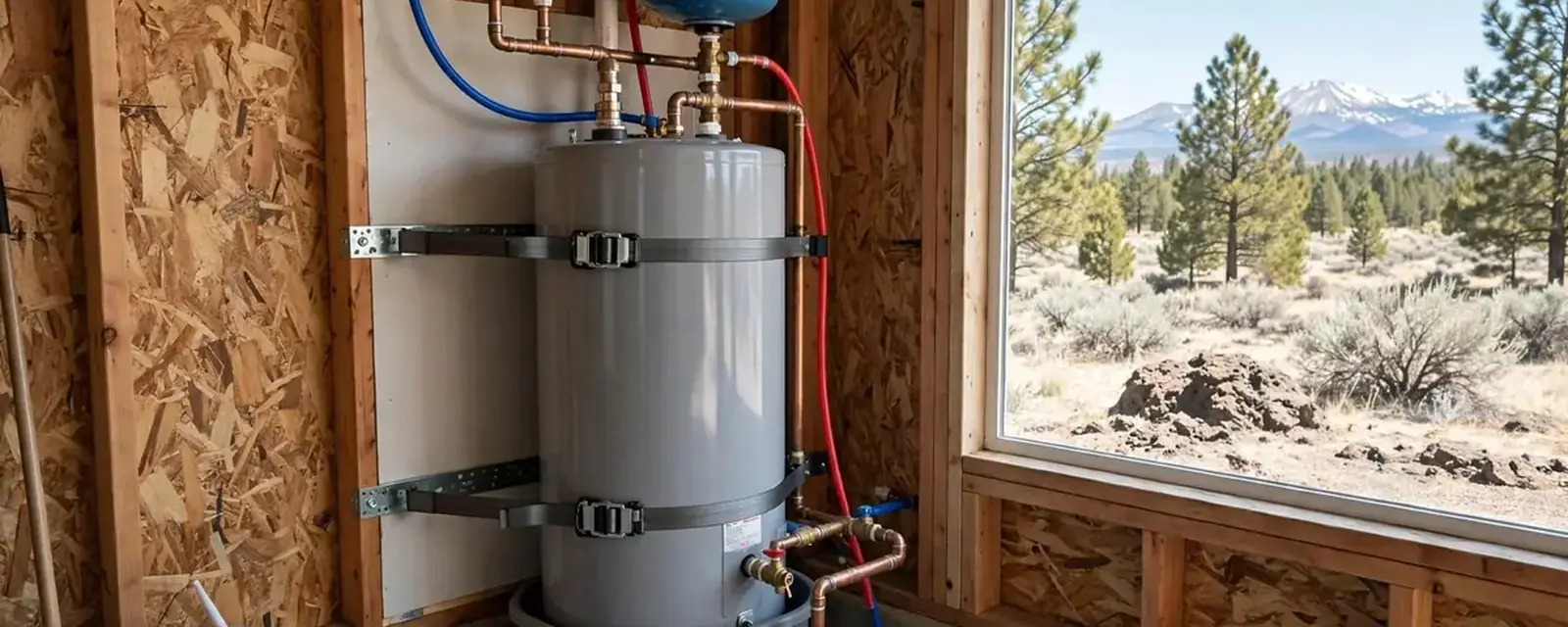
The relief valve on a water heater, called a T&P valve, opens when pressure or temperature inside the tank climbs too high. If it drips, sticks, or blows hot water, a Reynoldsburg, OH homeowner has two possible stories: the valve is worn, or the tank is overheating and the valve is doing its job. Replacing the valve fixes only the first. This guide shows how to tell the difference.
Safety comes before any wrench work
A water heater stores a lot of hot water under pressure, and a failed safety valve can lead to scalds or tank rupture. Turn off the power at the breaker for an electric unit, or set a gas unit to pilot or off, then let the tank cool. If you smell gas, leave the house and call the gas utility or 911 first. Do not try this swap if you cannot shut off power or gas safely.
Signs the valve needs attention
Not every drip means the part is bad. Match what you see to the likely cause.
Steady drip at the pipe
Mineral buildup on the seat or a worn spring. Often a valve problem.
Water spits in bursts
Pressure in the system is climbing. Check thermal expansion and water pressure.
Hissing or steam
The tank may be overheating. Shut off power or gas and call a plumber.
Corrosion at the outlet
Slow leaks leave crusty deposits. Replace the valve and the drain pipe if corroded.
Never opened, never tested
Valves can seize in place over time. A stuck valve will not open when it should.
Replace the valve, or look deeper first
Use this before you buy a part.
| Symptom | Likely cause | Next move |
|---|---|---|
| Light seep, new water heater | Overfilled or air in the line | Watch and retest after a few days |
| Constant drip, tank is many years old | Worn valve | Replace the valve |
| Drip only while the heater runs | Thermal expansion | Ask a plumber about an expansion tank |
| Water too hot at taps | Thermostat or element fault | Shut off and call a plumber |
| Tank leaks from the body | Corroded tank | Plan a replacement |
A valve that opens during normal use is often protecting you from a deeper problem.
Parts and tools to have on hand
Match the valve to the tank label before you shop.
- Replacement T&P valve with the same pressure and temperature rating
- Pipe wrench and an adjustable wrench for the threaded fitting
- Pipe thread sealant rated for potable water lines
- A bucket and towels for the water in the tank
- A discharge pipe of the right material that fits the valve outlet
How the swap goes for a competent DIYer
Only attempt this if the power or gas is off and the tank has cooled.
Cut power or gas
Turn off the breaker for an electric tank. For gas, set the control to pilot or off, and confirm no flame is lit.
Close the cold supply
Shut the cold inlet valve above the tank. Open a hot tap upstairs to relieve vacuum.
Drain a few gallons
Attach a hose to the drain valve and let the water level drop below the relief valve opening.
Remove the old valve
Disconnect the discharge pipe and unscrew the valve counterclockwise with the wrench.
Install the new valve
Wrap the threads with sealant, thread the valve in by hand, then snug with the wrench. Reconnect the discharge pipe, restore water, check for leaks, and then restore power or gas.
The discharge pipe is part of the safety system
The pipe that leaves the valve should point downward, end near the floor or drain, and never be capped or threaded at the end. A blocked pipe can prevent the valve from releasing. Keep the opening visible so you can see if it drips.
If your tank is in a closet or crawl space with no easy drain path, a plumber can reroute it safely. This is one of the reasons our water heater repair visits include a look at the discharge line and not just the valve.
When the tank, not the valve, is the problem
A new valve will not fix a tank that is overheating or leaking at the seams. If the valve keeps dripping within days of replacement, or the tank shows rust at the base, the heater is at the end of its service life.
At that point a swap costs more than it saves, and a plan for water heater replacement is the safer route. A plumber can match capacity and fuel type to the household and remove the old tank.
Serving nearby towns from Reynoldsburg
We dispatch from Reynoldsburg to Whitehall and Pickerington, so a relief valve call in either town gets the same shutoff and testing routine. In a postwar Whitehall house, the heater is often an older unit near the end of its life.
Reynoldsburg note: hard water and valve life
Columbus says it softens its water on average to 120 parts per million, or approximately 7 grains per gallon, and it lists Reynoldsburg as a water and sewer contract community. Even softened water leaves some mineral scale, and scale can keep a relief valve seat from closing. Lift the valve lever briefly once a year to flush it, with the discharge pipe pointing safely downward.
For permits, Franklin County Public Health inspects plumbing in Reynoldsburg. Ask FCPH or your plumber whether a permit applies to a water heater job, since this guide does not state a rule.
Source type: Columbus Division of Water hardness page, and Franklin County Public Health plumbing page.
Quick answers
Only if you can shut off power or gas, close the cold supply, and drain the tank safely. If you smell gas, see rust at the burner, or the valve is spitting hot water, leave it and call a plumber. The valve protects against a tank rupture.
Common causes are a worn valve seat, scale buildup, high water pressure, or thermal expansion. If the water heater is also overheating, it is a deeper fault. Replacing the valve fixes only a worn one.
Columbus says it softens its water on average to 120 parts per million, or about 7 grains per gallon. That is softened, but scale can still form over time. Flush the tank each year and test the relief valve lever so the seat does not stick.
Never. Capping the valve or its discharge pipe removes the safety feature and can lead to tank failure. If the valve leaks, replace it or have a plumber find the underlying pressure or heat problem.
There is no fixed rule. Test it yearly by lifting the lever, and replace it if it drips afterward, sticks, or shows corrosion. A relief valve on a very old tank is often replaced along with the heater.