
A drain needs cleaning when water leaves slower than it should, makes noise on the way out, or smells like something is sitting in the pipe. In Reynoldsburg, OH homes, the usual cause is a slow buildup of grease, soap film, hair, and wipes that narrows the pipe until one more bad week closes it.
Catching the signs early keeps a ten minute chore from turning into a backed-up floor drain. This guide covers what each symptom means, which ones you can test yourself, and the point where a plumber with a drain machine is the better choice.
What a clog really is
Most people picture a clog as a plug, like a wad of hair stuck in one spot. Real clogs grow more like plaque in an artery. A thin coat of kitchen grease catches soap scum, the scum catches hair and food bits, and the opening shrinks a little each week.
That is why a drain can seem fine on Monday and dead by Saturday. The pipe was already mostly closed, and one heavy load of laundry or a large pot of pasta water was all it took to finish the job.
Six warning signs to watch for
Any one of these can be a fluke. Two or more at once point to a buildup you should deal with soon.
Water drains slowly
A sink or tub that takes a full minute to empty has a narrowed pipe. It rarely gets better on its own.
Gurgling after flushing
Air is fighting past a partial blockage. Listen for bubbling in a tub or shower when the toilet runs.
Smells that keep returning
A sour or swampy odor that comes back after you rinse the drain means residue is rotting inside the pipe.
More than one fixture affected
If the shower and the bathroom sink both run slow, the problem is likely in the branch line they share.
Standing water in the basement
A wet floor drain or a basement tub that fills when you do laundry is a main line warning.
Fruit flies near drains
Tiny flies hovering at a sink point to organic film. They breed in it, so the film is thick enough to feed them.
What each symptom usually means
Where the symptom shows up tells you where the blockage probably sits.
| What you notice | Likely location | Reasonable next move |
|---|---|---|
| One sink slow, others fine | Trap or short branch under that sink | Clean the trap, then try a hand auger |
| Tub and sink slow together | Shared bathroom branch line | Machine cleaning from a cleanout or vent |
| Toilet bubbles when washer drains | Main line or vent trouble | Stop using water and call a plumber |
| Basement floor drain gurgles | Main drain toward the street | Camera inspection plus main line cleaning |
| Kitchen sink backs into the other basin | Grease buildup past the double trap | Cable the line, then change habits |
Two fixtures failing at the same moment almost always rules out a simple trap problem.
What to try before you call
These are safe, low-risk steps. Stop if water starts rising instead of falling.
Remove the stopper
Pull out the pop-up or strainer and wipe off the hair mat. In bathroom sinks and tubs, this fixes a surprising share of slow drains.
Flush with hot water
Run the hottest tap for two minutes. This helps with fresh grease but does little for hair or soap scale.
Clean the trap
Set a bucket under the U-bend, unscrew the slip nuts by hand, and empty the trap. Check the washers before you reassemble.
Use a hand auger
Feed a small drum auger in slowly, crank clockwise, and pull the snag out. Do not force it past a hard stop.
Skip the harsh chemicals
Caustic drain openers can sit in a fully blocked pipe and burn your skin or damage old fittings. They also make the next plumber's work riskier.
Home cleaning versus professional cleaning
Both have a place. The question is how deep the buildup is and how far away it sits.
Reasonable to do yourself
- Hair clogs in a tub or bathroom sink
- A trap you can reach under one sink
- Light kitchen grease in a short run
- Pop-up stoppers and strainers
Better left to a plumber
- Backups in more than one fixture
- Water in a basement floor drain
- Odors that return within days
- Any clog that cabling did not clear
Habits that slow the buildup
Small changes at the sink keep the pipe open between cleanings.
- Scrape plates into the trash instead of the kitchen sink
- Pour cooled cooking fat into a can, not down the drain
- Fit a mesh catcher over every shower and tub drain
- Flush only toilet paper, even if wipes say flushable
- Run hot water for a full minute after washing greasy dishes
- Clean pop-up stoppers on the first of every month
How professionals clear a line
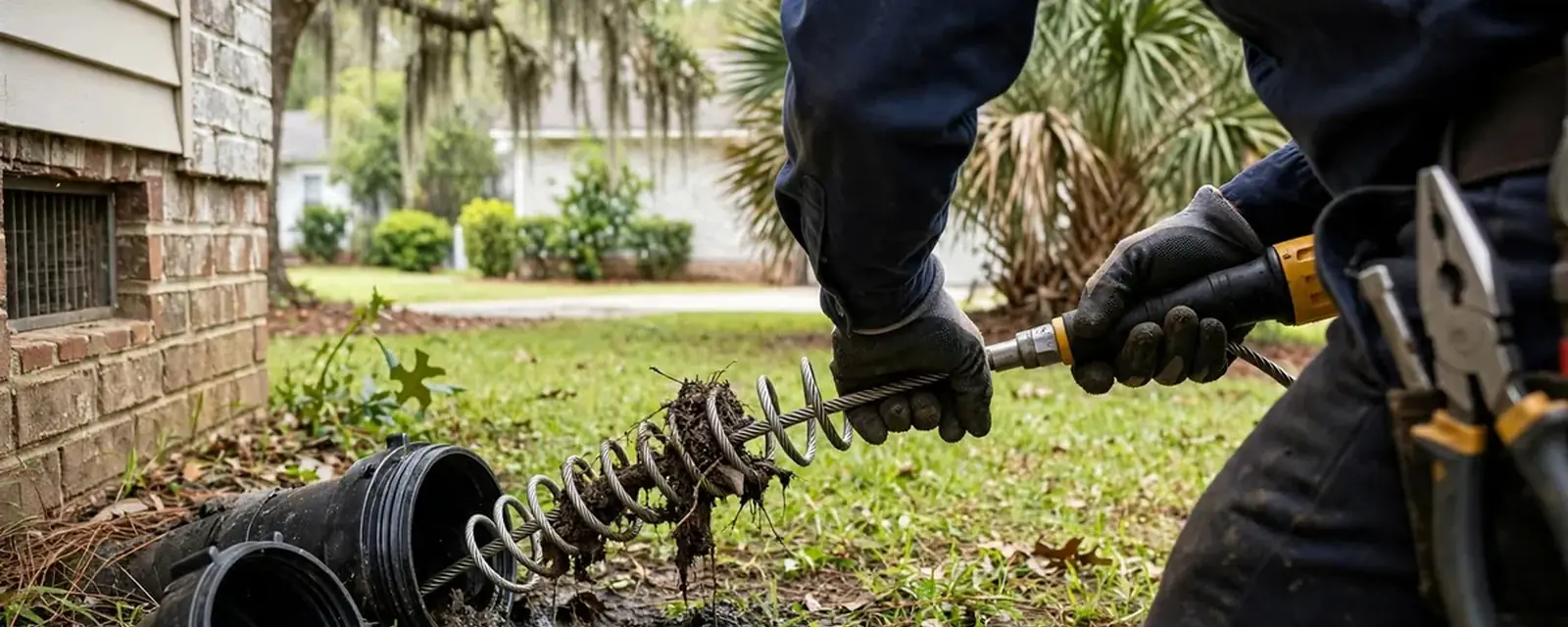
A plumber starts by learning how far the blockage sits. A hand cable works for short runs. For a main line, a motorized drain machine with a cutting head scrapes the pipe wall instead of poking one hole through the middle.
For heavy grease or roots, high pressure water can scour the inside of the pipe. If the same line keeps clogging, a camera shows if you have a belly, a crack, or a root intrusion. Our drain cleaning service starts with the symptom and works toward the least invasive fix, and larger main lines get the full sewer line cleaning treatment with a machine sized to the pipe.
When a slow drain becomes an emergency
Stop using water and call if sewage is coming up in a tub or floor drain, if several fixtures back up together, or if you smell sewer gas in the house. Do not run the washer or dishwasher.
Households in Gahanna and Whitehall often call us after a basement drain starts to bubble during heavy rain or laundry day. We dispatch to Gahanna and the Whitehall area from our Reynoldsburg base, and 24/7 emergency dispatch covers nights and weekends.
Reynoldsburg note: who owns which part of the sewer
Columbus lists Reynoldsburg, Gahanna and Whitehall among its Water and Sewer Contract Communities. That tells you the city is tied into a larger regional system, but it does not say which pipe belongs to you and which to the utility. Before you dig or replace anything, ask your utility where private responsibility starts.
For drain cleaning, the practical point is simple. A clog that appears only in your house plumbing is yours to fix. A backup affecting the street or neighbors may be a main line problem, so mention it when you call, and note the time of day it happens.
Source type: Columbus.gov Water and Sewer Contract Communities page.
Quick answers
There is no calendar that fits every house. A kitchen that sees a lot of cooking needs attention sooner than a guest bath. Watch for slower flow, odors, and gurgling, and clean at the first sign instead of waiting for a full stoppage.
Yes. A slow drain means the pipe has lost some of its width, and buildup keeps growing while you wait. Clearing it now is a small job. Clearing it after a full stoppage can mean cabling a main line.
It fizzes, but it does little to hair or compacted grease. It is harmless for freshening a drain, so go ahead for odor. It will not replace mechanical cleaning when the pipe is narrowed.
Repeat clogs usually mean something structural, such as a sag in the pipe, a rough joint, or roots. A camera look shows the cause. Cleaning without finding it just resets the clock. See our main line cleaning page for how that works.
Because Reynoldsburg is listed as a Columbus Water and Sewer Contract Community, ask your utility how a suspected main line issue is handled. If the blockage is on your side of the connection, a plumber can clear it the same day when appointments are available.