
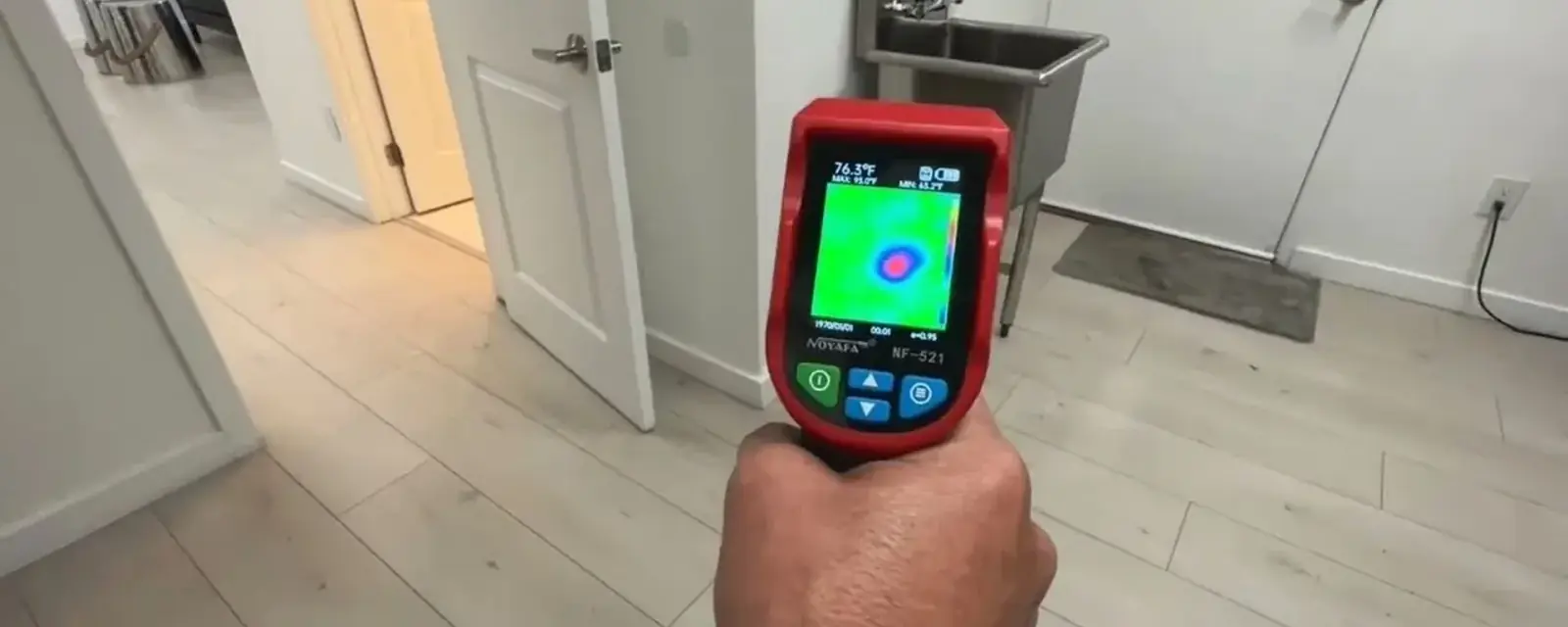
Acoustic water leak detection finds a hidden leak by listening to the pipe. Pressurized water escaping through a small hole makes a hiss or a hum that travels along the metal, and sensitive microphones can pick it up from the floor, a wall, or a valve. For Reynoldsburg, OH homeowners, that can mean a repair crew opens one small patch of drywall or concrete instead of a whole room.
This guide explains what the equipment does, what it cannot do, what you can check first, and why locating a leak accurately saves more mess than any other single step.
How the listening works
A leak is a tiny jet of water forced through a narrow gap. That jet vibrates the pipe wall and the surrounding soil, and the vibration moves outward as sound. A ground microphone or contact sensor turns that sound into a signal the technician can hear through headphones and see on a screen.
The sound is loudest right above the break. By moving the sensor in small steps and comparing volume, the technician narrows a leak down to a spot a few inches wide. A ten foot guess becomes a mark on the floor.
Water pressure helps here. The higher the pressure in the line, the louder the leak, so a quiet house with the main valve open gives the cleanest reading.
How a detection visit unfolds
The order matters because noise from the house can drown out a quiet leak.
Rule out the obvious
We check fixtures, supply lines, and the water heater for visible drips so we do not chase a leak that is sitting in plain view.
Quiet the house
Appliances are shut off and taps closed. A running ice maker or softener can mimic the sound of a leak.
Listen at contact points
Sensors go on valves, hose bibs, and cleanouts first. Those hard fixtures carry sound farthest along the line.
Scan the floor or ground
The technician walks the suspected route and listens at intervals, marking the loudest point.
Confirm before opening
A second reading, sometimes with a pressure test, confirms the mark. Only then do we talk about repair options.
Which method fits which situation
Acoustic tools are strong, but not for every problem. A good detector picks the right method.
| Situation | Acoustic detection | Other method that may help |
|---|---|---|
| Pressurized supply line leak | Works well on metal pipe | Pressure test to confirm |
| Leak under a slab | Often pinpoints the spot | Thermal imaging if hot line |
| Drain or waste line leak | Poor fit, little pressure | Camera inspection or dye test |
| Plastic supply pipe | Quieter, harder to hear | Tracer gas or pressure isolation |
| Noisy house or traffic | Reduced accuracy | Repeat at a quieter hour |
Quiet hours matter because wind, traffic, and nearby pumps all add noise the sensor has to ignore.
Clues that suggest a hidden pressure leak
Check these before you book a detection visit. Several together raise the odds.
- Water meter dial spins while every fixture is off
- A warm spot on a floor over a hot line
- Sound of running water in a silent house
- Damp patch in yard along the water line
- Water pressure that has dropped without a cause
- Musty odor in a cabinet or closet floor
What acoustic detection cannot do
It cannot find every leak. A very slow weep makes almost no sound, and a plastic or composite pipe muffles what sound there is. Concrete and thick fill also soften the signal, so a technician may combine listening with a pressure test.
It also tells you where, not how. After the leak is located, the real question is whether to patch the pipe, replace a short section, or reroute the line. Our leak detection work ends with a clear explanation of those options before any digging starts.
Ask what the repair will involve before you approve any opening. A clear price before work starts, along with a marked spot and a stated scope, keeps the surprises small.
Pinpointing first versus guessing and opening
The cost difference is mostly in how much of your house gets disturbed.
Pinpoint, then open
- One small patch of wall or slab
- Less drywall dust and repainting
- Faster dry-out and cleanup
- A clear repair scope
Open and hope
- Several exploratory holes
- More patching and finishing
- Water keeps running meanwhile
- Repair scope stays unknown
If the leak is outside the house
Leaks on the line between the street and the house are common candidates for acoustic work, because the soil carries sound and the pipe is under steady pressure. A wet patch in the yard, a lawn that stays green in a dry week, or a meter that runs with the house off are typical hints. Once the spot is marked, water line repair can often be done with a focused trench instead of a long cut across the yard.
We serve Pickerington and Gahanna as well as Reynoldsburg, and the same listening process applies to both.
Reynoldsburg note: call before you dig
Ohio law requires whoever digs to notify OHIO811 first. You can dial 811, with at least 2 working days notice before the work begins. Utilities mark the lines they own. This matters for leak work because the repair trench is exactly the kind of digging the law covers.
OHIO811 says privately owned lines are the homeowner's responsibility and may not be marked, so a private locator may be needed. For a leaking service line, that means you should expect to pay attention to where the line runs. Ask your plumber to handle the notification, since the contractor doing the work is the one who must make it.
Source type: OHIO811 homeowner information (oups.org).
Quick answers
On a pressurized metal line, a skilled technician can often narrow a leak to a patch a few inches wide. Accuracy drops with plastic pipe, deep fill, and background noise. That is why we confirm with a second reading or a pressure test before opening anything.
No. The listening step happens at the surface. Digging or cutting only starts after the spot is marked, and then it is limited to that spot. Our job during detection is to protect your floors, not open them.
You can try a screwdriver or a glass held to a wall to hear running water, and it sometimes works for a loud leak. It will not pinpoint a quiet one under a slab. Professional sensors amplify and filter the sound far better.
Shut off every fixture, note whether the meter moves, and write down where you noticed damp spots or sounds. Turn off ice makers and softeners if you can. A quiet house makes the readings cleaner.
Ohio law says the contractor doing the work must notify OHIO811 before digging, with at least 2 working days notice. Private lines may not be marked, so ask your plumber how the line will be located before the trench is opened.