
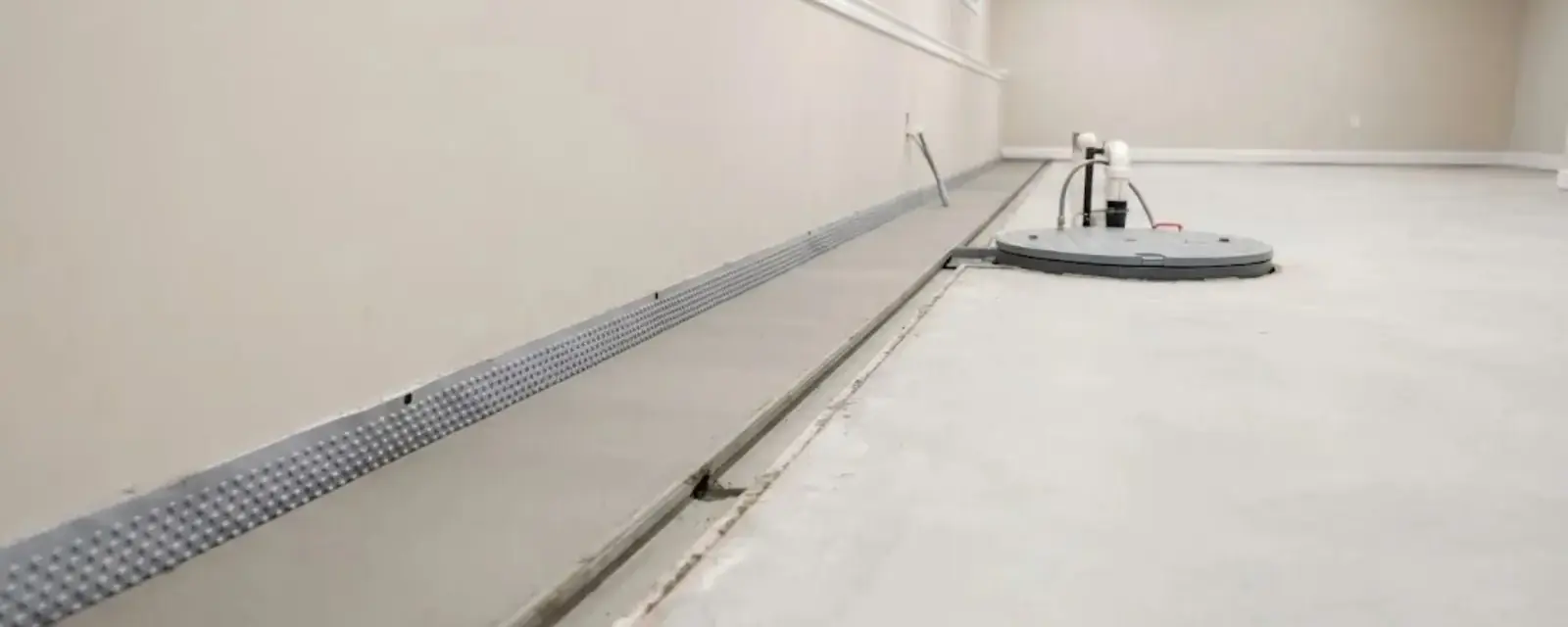
Waterproof flooring for a basement in Reynoldsburg, OH means a surface that tolerates damp concrete and the occasional spill without swelling, rotting, or growing mold. Vinyl plank, porcelain tile, and sealed concrete all qualify. But the floor is the last layer, and the first job is proving the slab stays dry enough to carry it.
Test the slab before you buy anything
Tape a two foot square of clear plastic sheeting to bare concrete, seal every edge, and leave it for two days. Water droplets under the plastic mean moisture is rising through the slab. Fog on the outside of the plastic only means the room air is humid.
A second check is a rented or borrowed moisture meter set to concrete. Take readings in the middle and at each wall. If the numbers jump near one corner or along a floor drain, you have a water path that flooring will not fix.
Dry slab or wet slab: two different projects
What you find in the test decides how much prep you need.
Slab that stays dry
- Plastic test shows no droplets after two days
- Meter readings stay low and even
- No white mineral crust on the walls
- Floor can go over a simple vapor barrier
Slab that sweats or seeps
- Droplets or dark patches under plastic
- Readings spike near walls or the drain
- Efflorescence, a white powder, on masonry
- Source must be fixed before any flooring
Floor materials compared for damp basements
Each choice handles moisture differently. None replaces drainage or a working sump.
| Material | Handles moisture | Watch for |
|---|---|---|
| Rigid core vinyl plank | Floating, water resistant planks | Trapped water at the edges if a flood sits |
| Porcelain or ceramic tile | Fully water proof surface | Cold underfoot, needs a flat slab |
| Sealed or epoxy concrete | Slab itself becomes the floor | Hydrostatic pressure can lift the coating |
| Raised subfloor tiles | Air gap lets the slab breathe | Lower ceiling height, more layers |
| Carpet and laminate | Poor, absorbs water | Not suited for a basement at all |
Rigid vinyl and tile are the two most common upgrades once the moisture source is fixed.
Prepping the slab for a floating floor
A clean, flat, dry surface is what keeps any new floor from failing in the first year.
Clear and sweep
Remove old carpet, tack strips, and adhesive residue. Vacuum the slab and wipe it with a damp mop.
Patch the cracks
Fill hairline cracks with hydraulic cement or a flexible concrete filler. Let each patch cure per the label.
Grind high spots
Mark ridges with a straightedge and grind them flat. Fill low spots with a self-leveling compound.
Lay the barrier
Roll out a vapor barrier or an underlayment rated for below-grade use, overlapping the seams and taping them.
Leave an edge gap
Keep about a quarter inch between planks and the walls so the floor can expand without buckling.
Where the water actually comes from
Most basement wetness comes from outside. Rain and snowmelt soak the soil, the soil presses on the foundation, and water finds a crack, a cold joint, or the gap where the floor meets the wall. Downspouts that dump next to the house make it worse.
Sometimes the source is plumbing. A weeping supply fitting or a slow drain leak can leave a damp patch that looks exactly like groundwater. Our basement waterproofing service starts by sorting out which one you have, because the fix for each is different.
If the basement is already taking on water
Standing water in a basement is a safety and cleanup problem before it is a flooring problem. Do not wade in while the power is on, and do not install flooring over wet concrete.
- Turn off power to the basement at the panel if outlets sit near water
- Shut off the main water supply if a pipe is the source
- Move valuables and furniture onto blocks or higher ground
- Run the sump pump if one is installed and confirm it discharges outside
- Photograph the damage for your insurer before you start cleanup
The sump pump is part of the floor plan
A sump pit collects water from the drain tile around the footing and pushes it outside. If the pump is weak, stuck, or has no battery backup, the floor above it is only as safe as the next power outage. A float switch that sticks is one of the most common reasons water reaches the slab.
Check yours by pouring a bucket of water into the pit and watching the cycle. If it hums but does not move water, or cycles on and off every few seconds, call about sump pump repair before you spend money on new flooring.
Service across the east side of Franklin County
Moisture problems follow the soil and the grading, not the town line. We are based in Reynoldsburg and dispatch to homes in Pickerington and Whitehall as well, so a basement in a postwar neighborhood and one in a newer subdivision get the same walk-through of the footing drain, the sump, and the pipes.
Reynoldsburg note: Blacklick Creek and your basement
Blacklick Creek flows through Reynoldsburg, and homes closer to the creek corridor may sit on wetter ground than homes on higher lots. Wetter soil means a higher chance of groundwater pressing on the slab after heavy rain, so plan a working sump before you plan a floor.
Reynoldsburg also reaches into Fairfield and Licking counties, and plumbing inspection can fall under different offices. If you add a new sump discharge line or a basement bathroom rough-in, ask the Franklin County Public Health plumbing office, or your local building department, which office handles your address.
Source type: Wikipedia (secondary) for Blacklick Creek and county boundaries, plus Franklin County Public Health plumbing page.
Quick answers
Rigid core vinyl plank and porcelain tile are the two most common choices because water does not harm them. Sealed concrete also works if the slab stays dry. The material matters less than fixing the moisture source first, since standing water can still get under any floating floor.
Yes, once the slab passes a moisture test and is flat. Use an underlayment rated for below-grade installation, tape the seams, and leave an expansion gap at the walls. Skip the install if the slab shows droplets or a meter reads high.
No. Flooring only resists damage. Water entering through cracks, the wall joint, or a failed sump still floods the room. Drainage, a working sump pump, and exterior grading are what keep the space dry.
Wetter soil near a creek corridor can raise the odds of groundwater pressure after storms, so a tested sump pump with backup power is worth planning for. A plumber can check the pit, the discharge line, and the footing drain before you finish the room.
Wait until the slab tests dry and any mold or wet insulation is gone. That may take days or weeks depending on the damage. Rushing the install traps moisture and leads to warped planks and odor.