
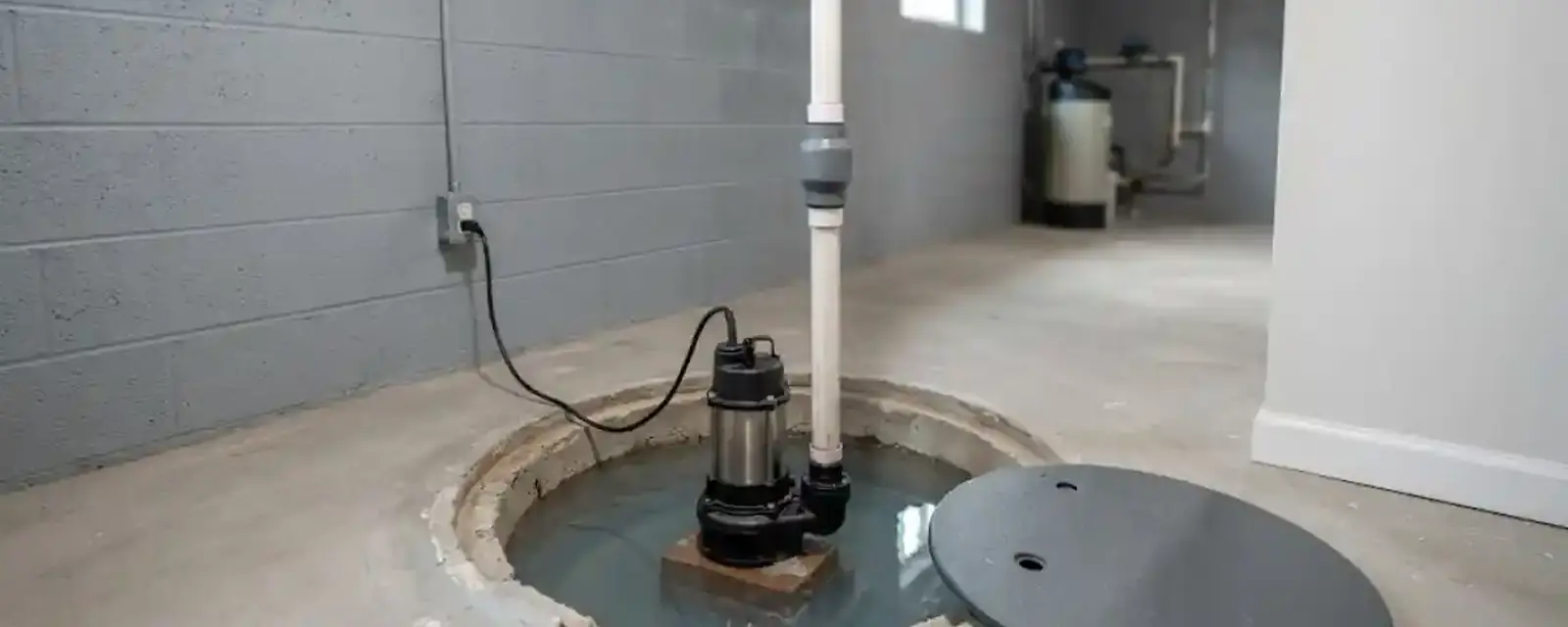
An exterior sump pump installation moves groundwater from a pit inside the basement to a discharge point outside, and the outdoor run is where most mistakes happen. In Reynoldsburg, OH, a good layout sends water well away from the foundation, keeps the line from freezing shut, and never drains onto a neighbor's lawn. This guide covers each piece in the order a plumber plans it.
What the exterior side of the system actually includes
People say exterior pump when they mean the discharge side: the pipe that leaves the house through the rim joist, the fitting where it exits, the buried or surface run, and the outlet that spreads the water. The pump itself still sits in the pit indoors.
Some homes also have a second pit or a French drain outside the footing that feeds the main pit. Each piece has a job, and the weakest link decides how long the system works during a heavy storm.
How a discharge line gets planned and built
The order matters because each step sets up the next one.
Pick the outlet
Find a spot at least ten feet from the foundation on ground that slopes away. Avoid driveways, shared fences, and the street.
Call before digging
Request a line locate before any trench is opened. Wait for the utilities to mark what they own.
Core the wall
Drill a clean hole through the rim joist or foundation wall above the pit. Seal around the pipe so water and pests stay out.
Run and slope
Lay rigid pipe with a steady fall toward the outlet. Add a check valve near the pump so water does not run back.
Finish the outlet
Fit a pop-up emitter or a screened end that opens under pressure and sheds ice or debris.
Buried line or surface line: the tradeoffs
Both can work, but they fail in different ways.
Buried discharge
- Looks cleaner and stays out of the mower's way
- Needs a trench and a locate before digging
- Can freeze if water sits in a flat section
- Repair means digging up the pipe
Surface discharge
- Faster to install and easy to inspect
- Can be tripped over or damaged by tools
- Flexible hose may kink under snow
- Exposed pipe cools quickly in cold snaps
Where the water can and cannot go
Choose a discharge point with these cautions in mind.
| Destination | Usually acceptable | Watch for |
|---|---|---|
| Sloped yard away from the home | Yes | Pooling that flows back to the house |
| Drywell or dry creek bed | Often | Soil that does not drain |
| Street or sidewalk | Sometimes questioned | Ice in winter and complaints |
| Neighbor's property | No | Disputes and possible liability |
| Sanitary sewer drain | Ask your water utility first | Connections may be restricted and can overload the system |
If your lot has no good outlet, ask a plumber to look at the grade before any trench is cut.
Freeze and clog protection for winter
A discharge pipe that holds water through a freeze can plug with ice, and then the pit fills during the next thaw. Slope the pipe so it empties completely after each cycle. Keep the outlet clear of leaves and mulch.
If the line has a flat spot or a belly, expect trouble in January. A bypass outlet higher up on the pipe, sometimes called a relief port, gives water a second route when the end is blocked.
Signs the system is already failing
If your pit is full and the pump is silent, act before the next storm. Standing water in a basement damages drywall, stored items, and electrical equipment.
- Unplug the pump and check the outlet for a plug or ice
- Test the float switch by lifting it by hand
- Do not stand in water if outlets or a panel are nearby
- Shut off basement power at the panel if water reaches the outlets
- Call a plumber for pump replacement or discharge repair
What changes the scope of the job
Four things shape the work: how far the discharge run is, whether the yard needs digging or a surface line works, whether a new core hole is required, and whether the pit needs replacement or a battery backup. A plumber measures these on site.
For homes with a pump that is already running but struggling, our sump pump repair visits check the float, the check valve, and the discharge before recommending a new unit. When the real cause is groundwater around the footing, we may point you toward basement waterproofing instead.
Serving homes beyond the city line
Discharge problems do not stop at the municipal border. From our Reynoldsburg base, we dispatch crews to Pickerington and Gahanna, where a lot's slope and the neighbor's yard often decide where the pipe can safely end.
Reynoldsburg note: dig notification comes first
Ohio law requires whoever digs to notify OHIO811 before breaking ground. Dial 811, give at least 2 working days of notice, and no more than 16 calendar days ahead. Utilities mark the lines they own, so a trench for a sump discharge should not start until those flags are up.
Privately owned lines, such as some service lines, may not be marked, and OHIO811 says those are the homeowner's responsibility. A private locator may be needed. The contractor doing the work makes the notification, so confirm who is placing the call before the schedule is set.
Source type: OHIO811 homeowner information page (oups.org).
Quick answers
Aim for several feet away on ground that slopes down and away from the foundation. Ten feet is a common target. If water drains back toward the house, it will cycle through the pit again and the pump will run constantly.
Yes. Ohio law requires notifying OHIO811 before digging, with at least 2 working days notice. Privately owned lines may not be marked, so the homeowner may need a private locator. Your contractor normally places the call.
Do not connect it without asking. Groundwater in the sanitary sewer can overload the system during storms, and many utilities restrict it. Send it outside to a sloped yard or a drywell, and ask your water utility or the county plumbing office about your lot.
Water left standing in a flat or low section of pipe freezes solid. Slope the line to drain after each cycle, keep the outlet clear, and consider a higher relief port. A frozen outlet can force water to back up into the pit.
A surface hose is simple, but a buried line needs a locate call, correct slope, and a sealed wall penetration. Electrical work for the pump should be on a grounded outlet. If the job involves new wiring or a core hole, call a licensed plumber.