
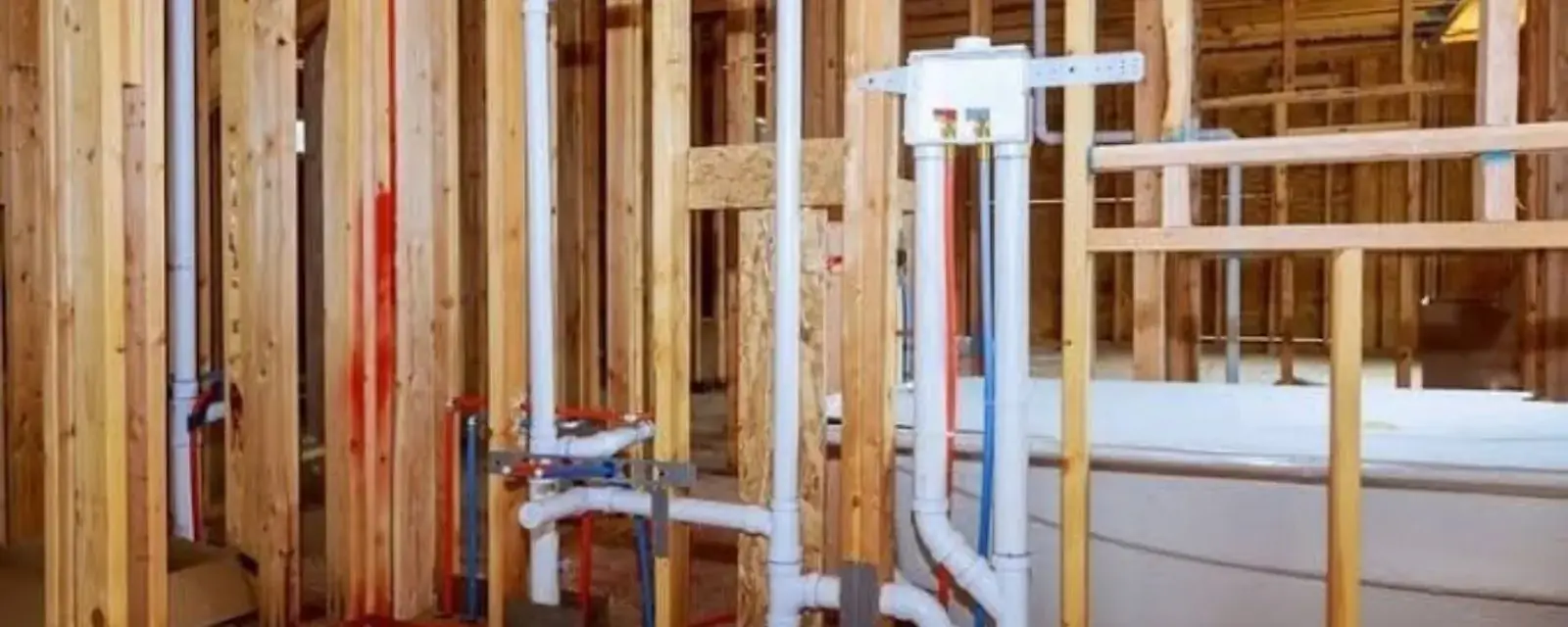
PVC pipe fittings are the molded connectors that join, turn, split, or cap plastic plumbing pipe, and they are glued together with primer and cement. For a Reynoldsburg, OH homeowner, the useful skill is matching the fitting to the job: drain lines, vents, sump discharge, and irrigation all use different parts. Picking the wrong one causes slow drains, leaks, and cracked joints.
The fittings you will meet most often
This table covers the parts that show up on nearly every home project.
| Fitting | What it does | Common home use |
|---|---|---|
| Coupling | Joins two pipes end to end | Repairing a cut or cracked section |
| 90 degree elbow | Turns the line a right angle | Sump discharge, vent runs |
| Sanitary tee | Branches with a gentle curve | Drain lines where waste flows |
| Cleanout adapter and plug | Gives rod or snake access | Main drain and long horizontal runs |
| Reducer | Steps between pipe sizes | Connecting a pump outlet to larger pipe |
| Male and female adapter | Threaded transition | Pump, valve, or spigot connections |
Drain fittings are built with sweeping turns. A hardware store pressure tee does not belong on a waste line.
Schedule 40, Schedule 80, and what the numbers mean
Schedule is a wall thickness rating. Schedule 40 is the white pipe you see on household drains and vents. Schedule 80 is thicker, usually gray, and used where pressure or physical abuse is a concern.
For most homeowner jobs, matching the schedule already in the wall is the rule. If your existing line is Schedule 40, use Schedule 40 fittings, and if you are not sure, check the printed marking along the pipe barrel before you buy.
PVC is for cold water and drainage, not hot lines
Standard PVC softens as it warms, so it never belongs on a hot water line or near a water heater flue. The connection at the water heater needs metal or a hot-rated material. If you see white plastic attached to a hot supply, stop and call a plumber to look at it.
How to make a solvent weld joint that holds
Follow this order on every joint. Skipping a step is the usual cause of seeps.
Cut square
Use a PVC cutter or a fine tooth saw with a miter box. A crooked cut leaves a gap the cement cannot fill.
Deburr both edges
Remove the burr inside and a light chamfer outside with a knife or deburring tool. Wipe off the dust.
Dry fit and mark
Push the pipe into the fitting without glue, then mark the depth and alignment with a pencil line.
Prime and cement
Brush primer on the pipe end and inside the socket. While it is wet, apply cement to both and push in with a quarter turn.
Hold and cure
Hold the joint firmly for about thirty seconds. Wait for the cure time on the can before running water through it.
Check these before you glue anything
A few minutes of prep prevents most tear-outs.
- Confirm the pipe sizes by reading the markings on the barrel
- Set the fixture or pump in place before final cuts
- Plan slope on drain lines so water runs downhill
- Ventilate the room because primer and cement fumes are strong
- Keep cement away from open flames and pilot lights
Drain lines need slope and a clear path
A horizontal drain needs a steady downward slope, about a quarter inch per foot, so liquids carry solids along. Too flat, and waste settles. Too steep, and water outruns the solids and leaves them behind.
If a cleanout sits at the wrong spot, a rooter machine cannot get through a trap. This is one reason our drain cleaning crews ask about the layout of the home before they put a cable down the line, and why a cleanout adapter is among the most useful fittings to add.
Mistakes that cause leaks a month later
The most common slip is skipping primer because the cement can says it is optional on small pipe. Primer softens the plastic so the weld bites deeper. Without it, a joint can look fine and then weep under the first real load.
Another is gluing a joint that is under stress. If the pipe has to be bent or forced into place, the fitting pulls apart as it cures. Support horizontal runs with hangers about every four feet, and let each joint sit still.
When new pipe means a bigger project
Adding a bathroom, relocating a laundry hookup, or running a new drain across a basement ceiling involves venting, slope, and often an inspection. A single wrong fitting can pull the water out of a trap and let sewer gas into the room.
For jobs like this, our plumbing installation work covers the layout, the permit question, and the fittings so the system drains and vents safely.
Beyond Reynoldsburg: how far a crew travels
Pipe work looks the same in every kitchen and basement, but access does not. We dispatch from Reynoldsburg to Gahanna homes and to Pickerington residents along I-70, so older houses with cast iron and newer ones with PVC both get a plumber who has handled each transition fitting.
Reynoldsburg note: checking a plumber's license
Ohio licenses plumbing contractors through the Ohio Construction Industry Licensing Board, and the public can check a license through Ohio's online license lookup. Ohio law also forbids acting as a licensed type of contractor without a license. Before you hire anyone to replace PVC drain lines in your Reynoldsburg home, run the lookup and confirm the business appears.
The lookup only takes a minute, and it tells you whether the person working on your drains is actually authorized to do the job.
Source type: Ohio Revised Code 4740.02 and 4740.13 via codes.ohio.gov, and Ohio Department of Commerce license lookup.
Quick answers
No. Standard PVC is not rated for hot water and can soften or fail near the tank. Use copper, stainless connectors, or a hot-rated material at the heater. If you are not sure what is currently installed, have a plumber look before you cut.
A sanitary tee has a curved inner path so waste flows smoothly into the main line. A plain tee has a sharp turn that catches solids. Use sanitary tees on drains and plain tees only on pressure lines such as irrigation.
Check the can for the rating, since cure time depends on pipe size, temperature, and humidity. Small drain joints can handle light use sooner, but wait for the full time before pressure testing or running a sump pump.
Ohio licenses plumbing contractors through the Ohio Construction Industry Licensing Board. Use the state's online license lookup and search by the contractor's business name. If the license does not show up, ask for the details before work starts.
A short, accessible section above a floor can be repaired with two couplings and a new piece. Do not attempt a repair on a gas line, a pressurized supply, or a main under a slab. Those jobs need a licensed plumber.